

Renting vs. Buying in Nairobi?
This question comes up in almost every residential conversation we have. A client is settled in their rental in Kilimani, Karen, or Runda. The lease is ending, or close to it. And they start to wonder: should I keep renting, or is now the time to buy?
It is one of the most personal financial decisions anyone makes. It is also one where emotion and instinct tend to overtake analysis. Our job as trusted advisors is to make sure you have the right information before you decide anything.
Here is what the Nairobi residential market is telling us in 2026.
The Case for Renting
Renting in Nairobi right now offers more choice than it has in recent years. Supply in the premium rental market has grown across Karen, Runda, Muthaiga, Lavington, Kilimani, and Westlands. That growth means tenants who know what they are looking for and come prepared have genuine room to negotiate.
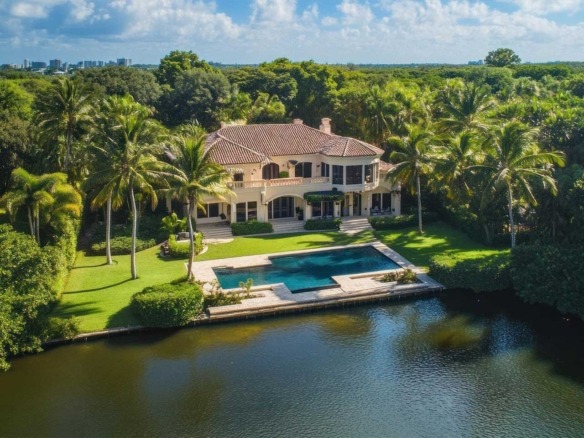
When we talk about premium rentals, we mean properties from KES 300,000 per month and above. At this level, you are looking at large, well-managed family homes in established low-density areas, with full backup power, professional security, and access to the international school corridors that matter to expatriate and senior professional families. Current listings in Runda and Muthaiga sit between KES 300,000 and KES 650,000 per month for four and five-bedroom homes, and the stock in this segment has improved markedly over the past 12 months.
For UN personnel and diplomatic staff in particular, Nairobi has a well-established inventory of approved homes across Karen, Gigiri, and the surrounding areas. These properties are managed to a consistent standard, they sit close to international schools and embassies, and availability is real. Renting in this segment is a mature market in its own right, not a waiting room for something else.
Renting also preserves capital. In a period of global economic uncertainty, keeping liquid capital available is not a weakness. For many households, it is a considered and intelligent position.
The Case for Buying
The most compelling argument for buying property in Nairobi in 2026 is also one of the oldest truths in real estate: in uncertain times, hard assets hold their value.
Nairobi’s overall residential market has seen modest price movement in recent years, with average appreciation across the city sitting at around 0.4 percent year-on-year in FY2024/25, according to the Kenya National Bureau of Statistics economic survey data. However, the premium low-density segment tells a different story. In areas like Gigiri, Karen, Runda, and Muthaiga, prime residential prices have been rising at between 5 and 8 percent annually, supported by sustained demand from expatriates, diplomats, and diaspora investors, according to reporting by The Star.
Rental yields on well-managed homes in these areas average between 6 and 8 percent. The reason for this divergence is straightforward: supply in these areas is genuinely constrained. There is limited land, controlled development, and a tenant base that does not disappear during economic uncertainty. That combination does not change quickly.
It is worth being clear about what we mean by the premium sale market. Nairobi has a broad high-end residential range, with quality family homes available from KES 80 million upward in areas like Karen and Runda. At the KES 150 million threshold and above, you are in the segment of large standalone homes on substantial plots, ambassadorial-grade residences and bespoke villas where supply is most constrained and value has held most reliably over time.³ This is the segment Newpoint focuses on, and it is the segment where the long-term investment case is clearest.
It is also worth noting that not all of Nairobi’s premium market is equally positioned. Luxury apartment segments in areas like Kilimani and parts of Westlands have seen some oversupply at the high end, which has softened absorption. Standalone, low-density homes in Karen, Runda, and Muthaiga tell a different story. Limited supply and genuine long-term demand make them a fundamentally different investment.
The Diaspora Advantage Is Real
For Kenyans in the diaspora, the numbers in 2026 are particularly compelling. Kenya’s diaspora sent home a record USD 5.04 billion, equivalent to KES 650 billion, in 2025, according to Central Bank of Kenya data surpassing tourism receipts and agricultural exports to become the country’s single largest source of foreign exchange. The CBK projects this will grow a further 4 percent to USD 5.24 billion in 2026.⁵ A meaningful portion of that capital is looking for a productive home, and Nairobi’s residential property market remains one of the most credible destinations for it.
The exchange rate advantage is real. As of early 2026, one US dollar buys approximately KES 130, and one British pound buys approximately KES 165, per CBK exchange rate data. That means a quality Nairobi home in the KES 80 million to 150 million range equates to roughly USD 615,000 to USD 1.15 million, a price point that would access a fraction of the equivalent in London, Toronto, or Sydney.
Beyond the numbers, a Nairobi property is a connection to home that no foreign bank account can replicate. For many diaspora buyers we speak with, this is not a secondary consideration. It is often the primary one.
The Question Nobody Asks Often Enough
In our experience, the renting versus buying decision is rarely just about money. It is about stage of life, certainty of plans, available capital, risk appetite, and what a home means to a specific person or family at a specific moment in time.
A couple who has just had children and wants long-term stability will think about this very differently from a professional who is still deciding how permanent their Nairobi base will be. A Kenyan returning from the UK after fifteen years abroad will make a different calculation from a local family that has saved steadily and is ready to commit.
The right answer is almost always: it depends. The value we bring is helping you understand what it depends on in your specific situation, and then helping you act on that understanding with clarity.
What to Do Next
The most valuable thing you can do right now is have an honest conversation with someone who knows this market and has no interest in pushing you toward any particular outcome. Our residential team at Newpoint works across rental and sale, in the premium segment of the Nairobi market. We have properties. We have relationships with landlords, sellers, and developers across the city. And we have the experience to help you make this decision well.
Come to us with your situation, your budget, and your timeline. We will show you what the market looks like, tell you what is actually available, and give you an honest view of your options.
No pressure. No agenda. Just a conversation that helps you decide.


Join The Discussion