
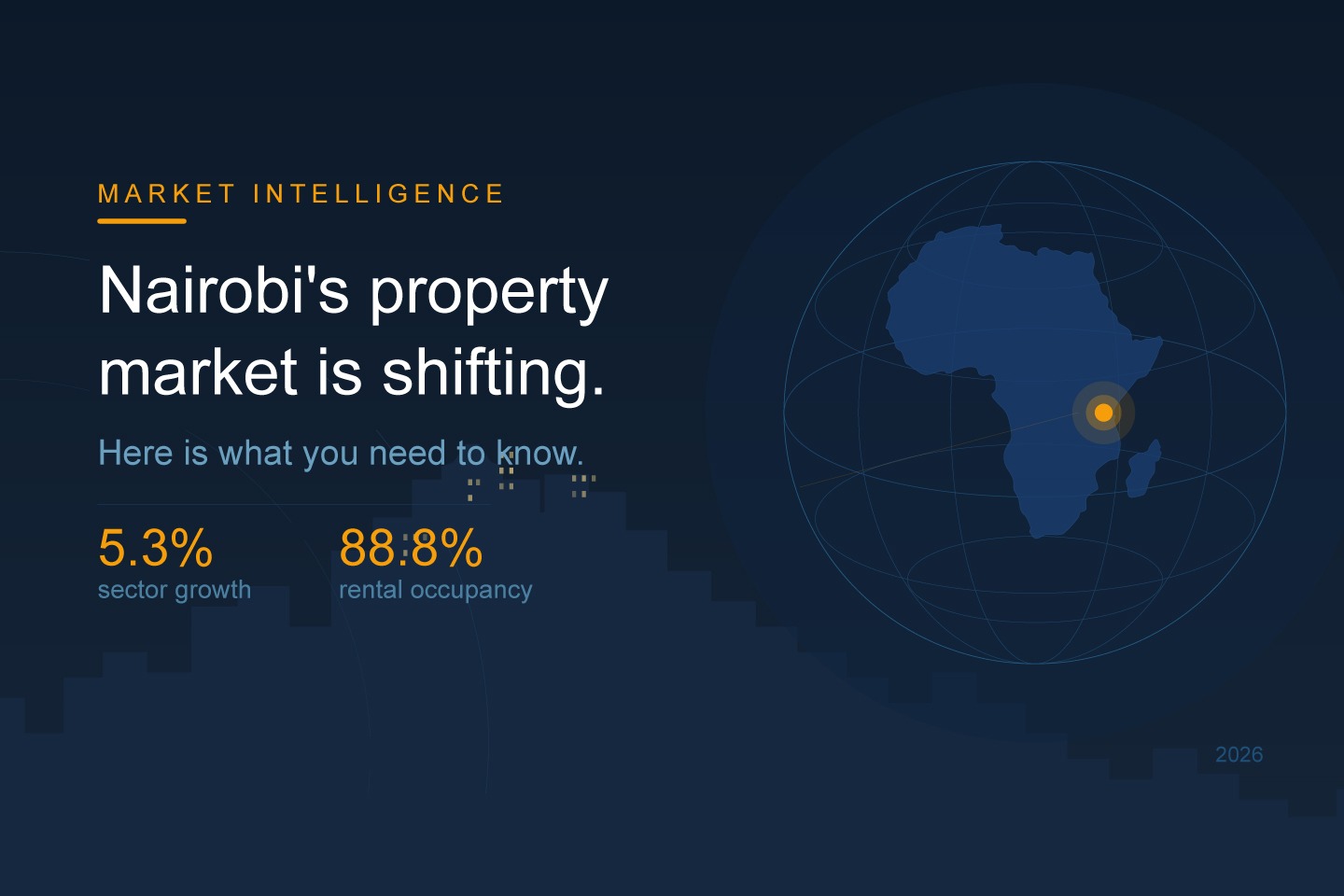
Kenya’s prime residential real estate market, especially Nairobi’s property market, is navigating a confluence of pressures in 2026. At Newpoint Properties, we are paying close attention to two in particular: the ongoing US-Israel war on Iran and its global economic ripple effects, and the natural caution that builds as Kenya approaches an election year in 2027. Neither is cause for alarm. Both are worth understanding clearly.
The Global Context: What the Iran War Means for Kenya
On February 28, 2026, the United States and Israel launched strikes on Iran, triggering a conflict now past 38 days. Iran responded by closing the Strait of Hormuz, the critical waterway through which roughly 20% of global seaborne oil passes and 29% of the world’s globally traded Liquefied Petroleum Gas (LPG) every day. The resulting energy shock has moved through inflation forecasts, currency markets, and investor sentiment worldwide.
Fitch has already revised Kenya’s 2026 GDP growth forecast downward from 5.2% to 5.0%, identifying Kenya as one of Sub-Saharan Africa’s most exposed economies to the conflict.
The Foundations of Nairobi’s Property Market Remain Strong
Before turning to the pressures, it is important to ground this conversation in what the data actually shows. According to the KNBS Economic Survey 2025 and the KNBS Real Estate Survey 2023/24, Kenya’s real estate sector has contributed an average of 8.9% to GDP over the past five years, grew by 5.3% in 2024, and its output expanded by 33.7% between 2019 and 2023. These are not the numbers of a fragile market.
The rental market reinforces this confidence. In 2023, 88.8% of residential properties on offer were successfully leased out, while 76.2% of properties listed for sale were sold within the year. In Nairobi’s prime corridors, two-bedroom townhouses delivered gross rental yields of 8.3% and three-bedroom maisonettes reached 8.0%. Demand for well-located, amenity-rich properties in areas like Westlands and Kilimani has remained structurally strong.
Underpinning all of this is a population of 52.4 million growing at approximately 2% annually, a housing deficit that the KNBS survey confirms remains significant, a diaspora that sent home KSh 674.1 billion in remittances in 2024, and international visitor arrivals that grew by 14.7% to 2.39 million in the same year, sustaining the steady flow of expatriates, diplomats, and NGO professionals who anchor demand in Nairobi’s prime neighbourhoods. These are structural advantages, not cyclical ones.
What the Iran Conflict Is Adding to an Already Shifting Landscape
1. Construction costs were already tightening. The KNBS Economic Survey 2025 shows that construction input inflation rose to 2.83% in 2024, cement consumption dipped by 7.2%, and bank credit to the construction sector fell to KSh 528 billion, all before the current conflict began. The Iran war is adding fuel to a cost environment that was already under pressure. Developers who have not stress-tested their project budgets against further input price increases may face delays or repricing ahead of launch.
2. Financing conditions are under mounting pressure. With Kenya relying on imported oil for roughly 90% of its energy needs, forecasts point to potential inflation spikes that erode purchasing power and add pressure to borrowing costs. The KNBS data shows Kenya’s CBR rate stood at 11.3% in 2024 with the shilling trading at KSh 134.8 to the dollar. Any further inflation-driven tightening will make mortgage access harder for buyers already working with thin margins.
3. Pre-election caution is compounding global uncertainty. Kenya’s election cycles have historically prompted a wait-and-see approach among property investors, and 2026 is no different. What makes the current moment more complex is that this domestic caution is now running alongside a global energy shock. The combination means buyers and developers face two headwinds simultaneously. Those who plan clearly through both will be the ones best positioned when conditions settle.
The Case for Planning Now
Waiting for certainty is a strategy that rarely serves property buyers well. Property prices in Nairobi’s prime corridors remain relatively stable, but that window will not stay open indefinitely. Rising construction costs are already beginning to work their way into new development pricing. Financing conditions, while still manageable, are facing upward pressure as inflation builds. And with the 2027 election cycle beginning to shape market sentiment, buyers who secure the right property on the right terms this year will be well positioned to sit out any short-term volatility ahead.
The difference between a good property decision and a great one is rarely about timing the market perfectly. It is about being prepared when the right opportunity presents itself.
How Newpoint Properties Can Help
At Newpoint Properties, our advisory, agency, property management, tenant representation, and private office teams work with clients to build exactly that kind of clarity. If you are considering a move in Nairobi’s prime residential market and want a grounded, honest conversation about what the current environment means for your specific situation, we would welcome the opportunity to connect.
Book a consultation with our team today. The right time to plan is always before you need to.
Sources: KNBS Economic Survey 2025, KNBS Real Estate Survey 2023/24, Fitch Ratings, Al Jazeera, Business Daily Africa.



Join The Discussion